
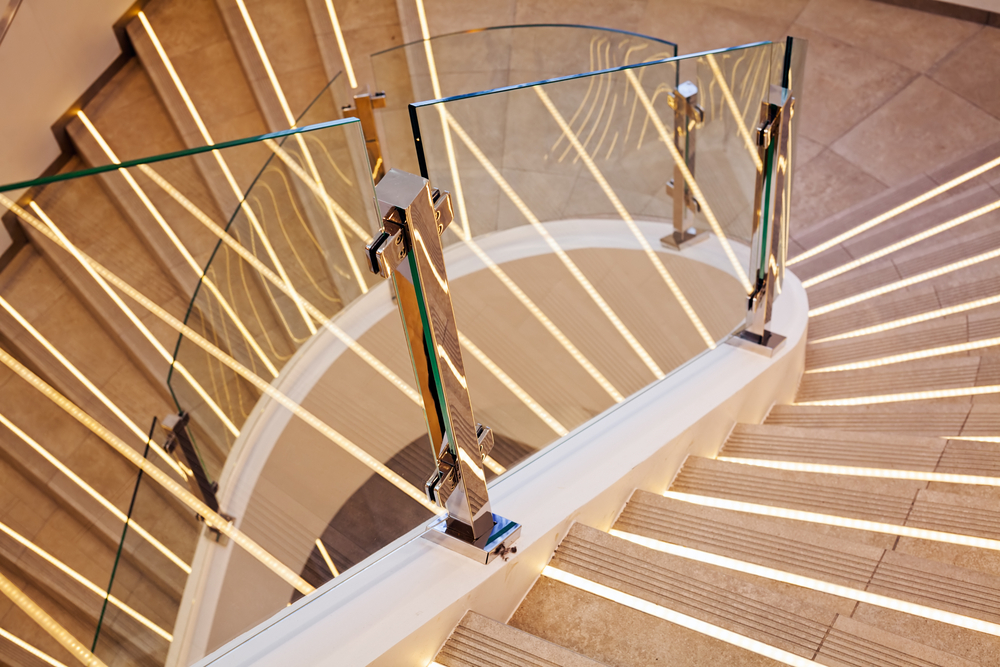
Glass panel railings are the detail that makes a staircase or balcony feel open and current. The glass disappears, the view stays intact, and the metal frame does the heavy lifting out of sight. What most homeowners never think about until they are planning a project is how the glass is actually held in place. The mounting method you choose changes the look, the sightlines, the cleaning routine, and even how the railing meets code. At Metalex Inc., the mounting system is part of the design conversation from the start, because it quietly shapes everything you see afterward.
Two Ways to Hold a Pane
Almost every glass railing uses one of two approaches, and the difference comes down to how the glass is gripped.
The first is a standoff or point-fixed system. Here, individual metal fittings, usually round stainless or powder-coated discs, bolt through or alongside the glass at a few points and anchor into a structural edge. The glass is held at discrete spots, so most of the panel edge is left exposed. This is the most minimalist look available, with the glass appearing to float off the structure.
The second is a channel or base-shoe system. Instead of individual points, a continuous metal channel runs along the bottom of the glass and clamps the entire lower edge. The channel can be surface-mounted on top of a floor or stair, or recessed so only the glass shows. Because the whole edge is captured, channel systems create a clean, uninterrupted horizontal line.
Where Each System Shines
Standoffs are often chosen when a homeowner wants to see as little hardware as possible and likes the industrial-contemporary feel of visible stainless fittings. They suit interior stairs and landings where the discs become a deliberate design accent rather than something to hide. Because they fix at points, they can also work well on side-mounted applications where the glass is attached to the face of a stringer or slab.
Channel systems tend to win where the goal is an unbroken sweep of glass with no visible fixings along the span, which is a popular choice for balcony railings and open-concept stair runs. The trade-off is a more substantial base line and, in surface-mounted versions, a shoe that sits on the finished floor.
Surface-Mounted or Recessed
Channel systems come in two forms. A surface-mounted base shoe sits on top of the floor or stair and is faster to install, but it leaves a visible metal strip at the bottom of the glass. A recessed channel is set into the structure so only the glass emerges, which produces the cleanest line but has to be planned before the surrounding floor or stair is finished. Deciding between the two early avoids costly rework later.
Interior Versus Exterior Considerations
Indoors, the decision is mostly aesthetic and practical: how much hardware you want to see and how the railing ties into the rest of the home. Outdoors, weather enters the conversation. Exterior railings face freeze-thaw cycles, wind load, and moisture that can collect in a base channel if it is not detailed to drain. Material choice matters here too, which is why stainless hardware and protective finishes are common on outdoor glass systems. The right combination keeps the fixings from corroding and the metal frame looking sharp through Toronto’s seasons.
The Metal Frame Still Does the Work
It is easy to focus on the glass and forget that the railing is a metal system. The posts, the top rail where one is used, and the mounting hardware are what carry load and satisfy guard requirements. Metalex Inc. works in wrought iron, steel, aluminum, and stainless steel, with finishes ranging from black metal to polished metal, so the visible metal of a glass railing can be matched to the rest of a home’s hardware rather than clashing with it. The glass provides the transparency; the metal provides the strength and the style.
Cleaning, Maintenance, and Living With Glass
Both systems are low-maintenance, but they clean differently. Point-fixed standoff panels leave most of the glass edge open, so there are fewer seams where grime collects, and wiping down the panels is straightforward. Channel systems hide the lower edge, which looks seamless but means the inside of the shoe should be checked occasionally, especially outdoors where debris and water can gather. In both cases, a soft cloth and mild detergent keep the glass and metal looking their best, and the metal components benefit from the same light upkeep as any finished railing.
Matching the Mount to Your Space
There is no single best system, only the best fit for a given stair, balcony, or landing. A tight interior stair with a structural stringer might call for side-mounted standoffs, while a long balcony edge might be better served by a continuous channel. The structure you are attaching to, the look you want, and whether the railing is indoors or out all steer the choice. Metalex Inc. builds custom interior railings to match a property’s size, style, and architecture, which means the mounting method is selected for your situation rather than forced onto it.
If you are planning a glass railing, bring your questions about mounting to the design consultation. Deciding between standoff and channel early makes the rest of the project, from structure to finish, far simpler to coordinate.
Frequently Asked Questions
Which looks more minimalist, standoffs or a channel?
Both are clean, but they achieve it differently. Standoffs leave most of the glass edge exposed with small visible discs, while a channel hides the fixings but adds a continuous base line. The "most invisible hardware" look usually comes from a recessed channel or carefully placed standoffs.
Can glass railings be used outdoors in Toronto?
Yes. Exterior glass railings use corrosion-resistant hardware and protective finishes to handle moisture and freeze-thaw cycles. Proper detailing, especially drainage in channel systems, keeps them performing through the seasons.
Do glass panel railings meet building code?
They can, when designed correctly. The metal frame, posts, and guard height do the code work, and the glass is specified to suit. Designs are intended to meet or exceed safety codes.
Are glass railings hard to keep clean?
No. A soft cloth and mild detergent handle the glass, and the metal components need only light upkeep. Standoff systems have fewer hidden seams, while channel systems reward an occasional check of the base shoe.
How do I choose the right system for my home?
Start with a design consultation. The structure you are mounting to, the sightlines you want, and whether the railing is interior or exterior all guide the decision, and Metalex Inc. will match the system to your space before providing a quote.